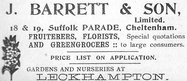
Early in December 1900 a horse belonging to Mr Barrett bolted in Bath Road, when it was attached to a cartload of pigs. The frightened animal dashed down the road, into Cambray, safely negotiated the corner of the High Street, and met with no obstacle until it turned into Winchcombe Street, which was very narrow before it was widened in the 1950s. Here the horse and cart mounted the pavement, where it ran over an elderly gentleman named Joseph William Gouch. He was fortunate to survive, suffering nothing worse than a bruised and sprained ankle. In order to prevent such incidents drivers were required to chain the wheels of unattended carts.
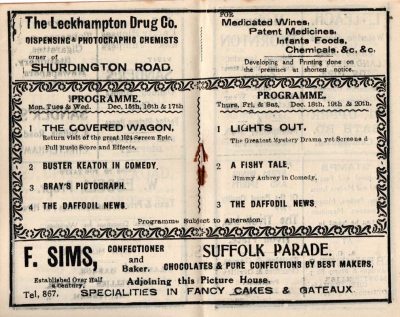
By 1910 J.Barrett & Son had expanded to occupy both 18 and 19 Suffolk Parade, creating a double fronted shop, which they leased from Frederick Sims, who owned the baker’s next door at 16 & 17 Suffolk Parade. Mr Sims, a member of Salem Baptist Church, had acquired ownership of all of the properties from 16 to 22 Suffolk Parade by 1920 and it seems evident that he had an ambitious plan for the area.
On 13th March 1922 the Daffodil Picture House Limited company was registered with the purpose of purchasing numbers 18,19,20 and 21 Suffolk Parade from Frederick Sims and to erect a picture house, a shop and other buildings, with the intent of carrying on a business of public entertainment. The nominal capital was £10,000 and the Directors included Frederick Sims and the Cheltenham architect L.W. Barnard, whom Mr Sims had already engaged on a project in 1913.
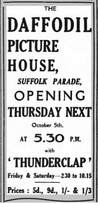
The cinema opened on 5th October 1922 and initially, having the largest financial interest in the undertaking and always being on the spot, it was natural for Fred Sims to be appointed Managing Director. He took a very keen interest in the cinema and was nearly always to be seen there but he suffered a severe stroke in 1923 and died in November 1926. By 1924 the manager was Mr William Rust. He began his cinema career in Dundee and from there went to Bristol in 1916, later moving to Cheltenham. He was eventually succeeded Mr Sims as Managing Director and retired in 1946.
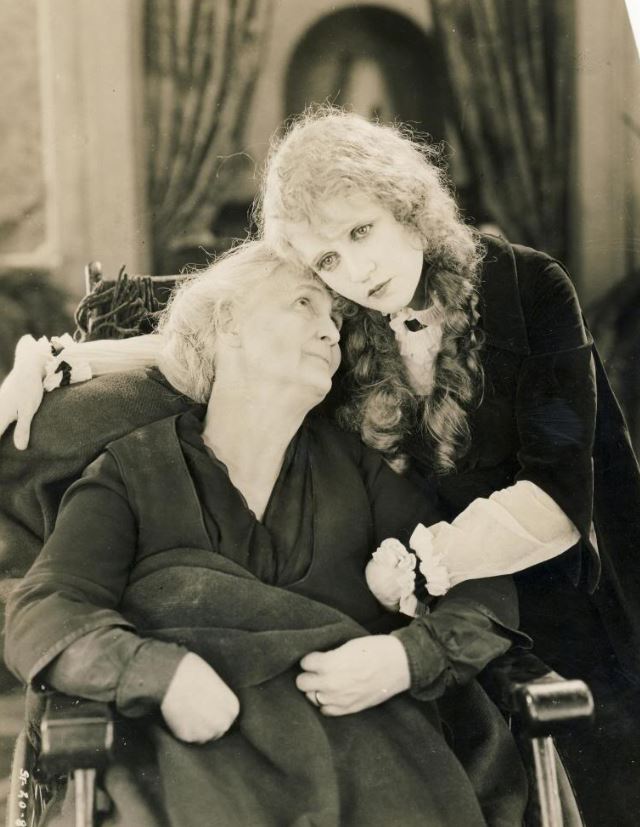
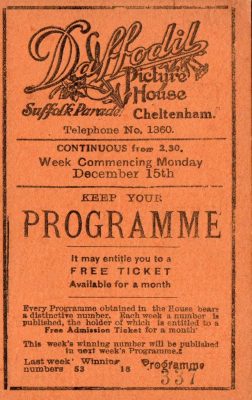
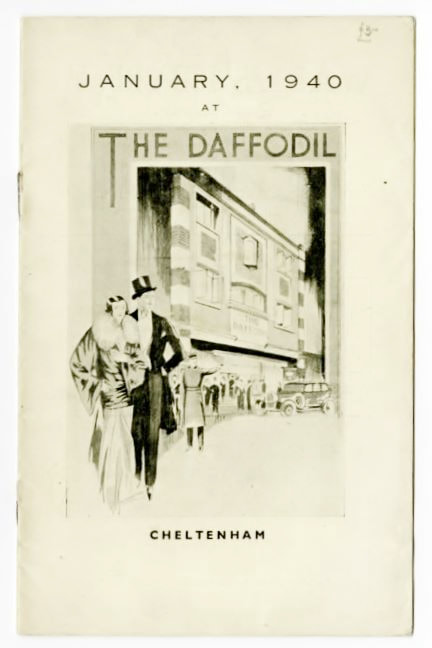
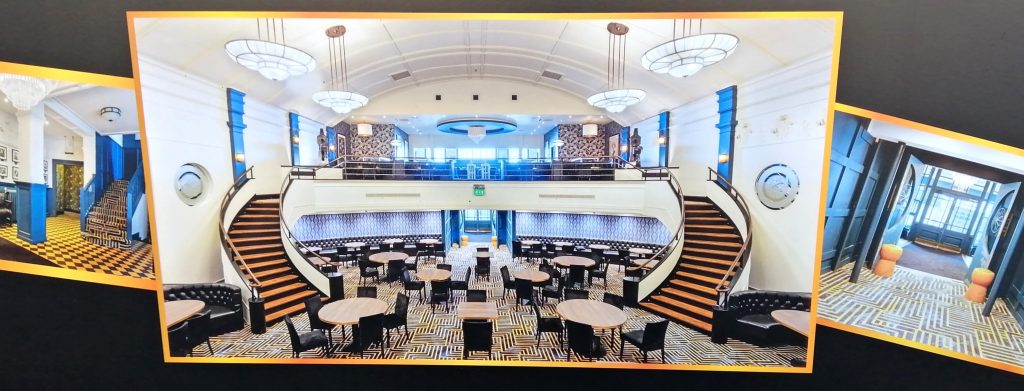
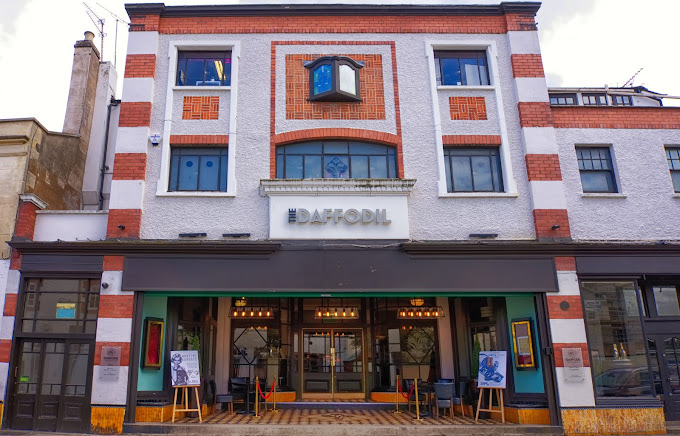
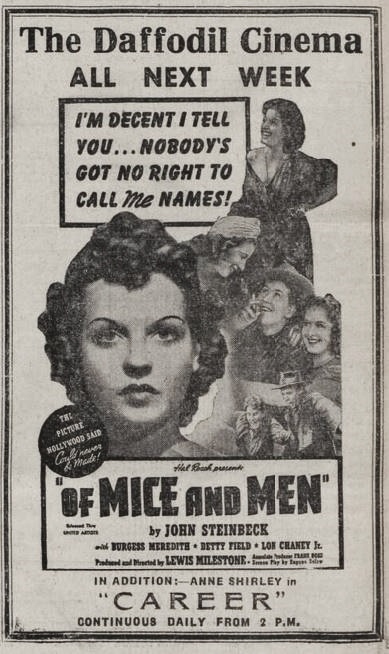
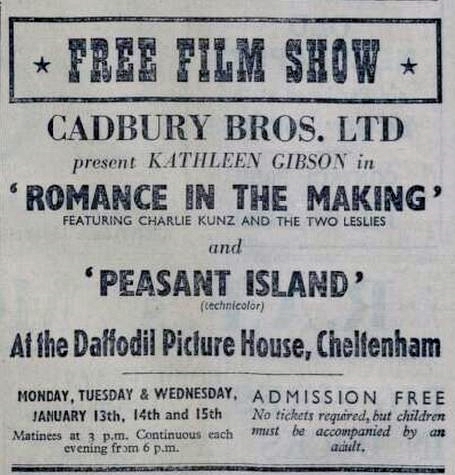
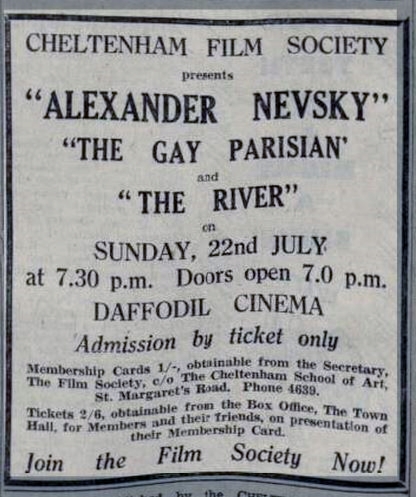
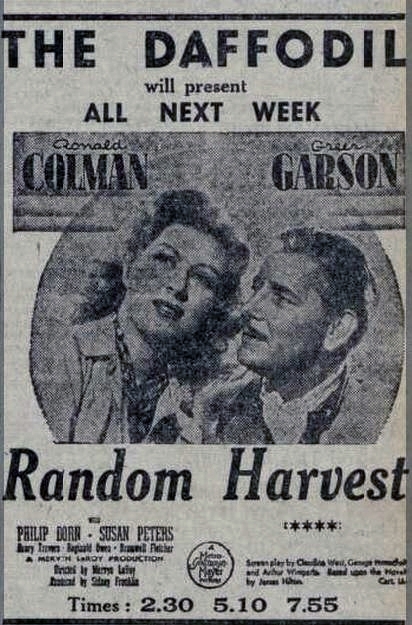
Although there were previous cinemas in Cheltenham, this was the town’s first to be purpose-built, in an art deco style. It had a distinctive white render and red brick facade and, internally, various daffodil motifs. There was a 750 seat large raked auditorium, with an upper circle balcony; a lounge complete with a tiled fireplace, paintings and oak panelling; an orchestra pit with a brass railing and pendant lights in the shape of daffodils. One noteworthy feature was the double seating in the balcony, much favoured by courting couples! At first the films were silent, some of them in colour, but in 1930 a sound system was installed.