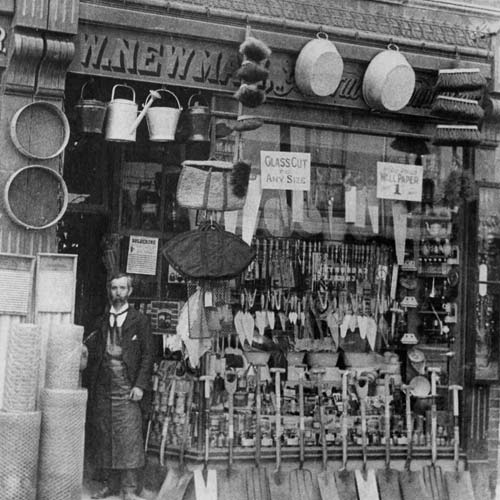
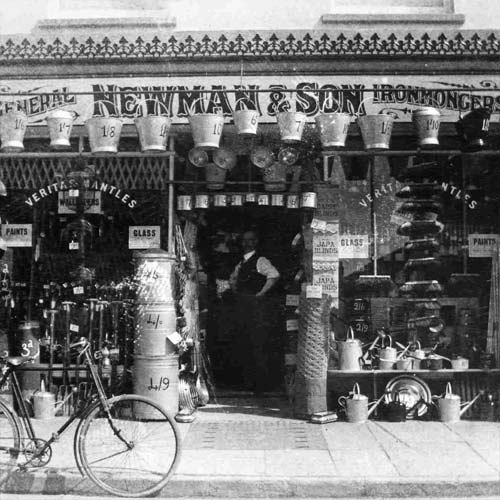
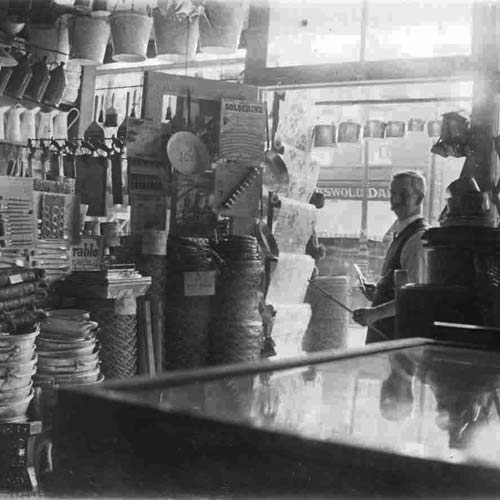
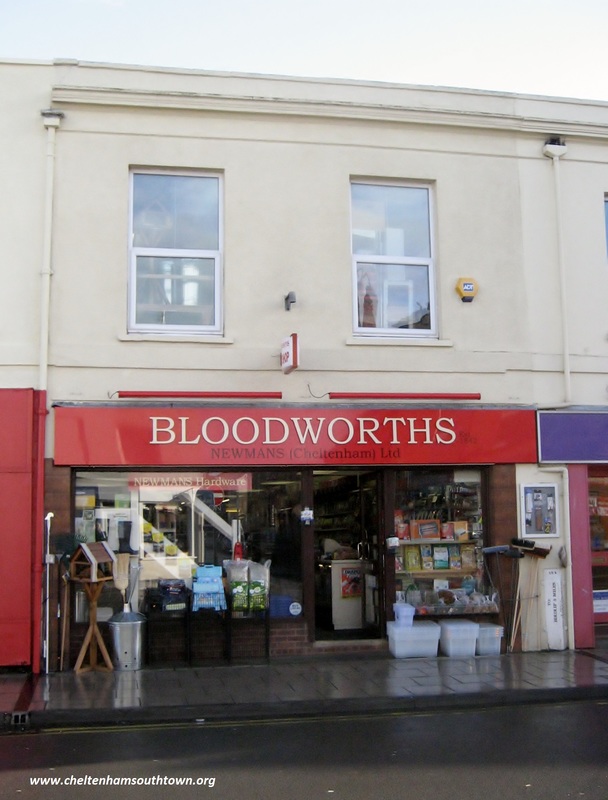
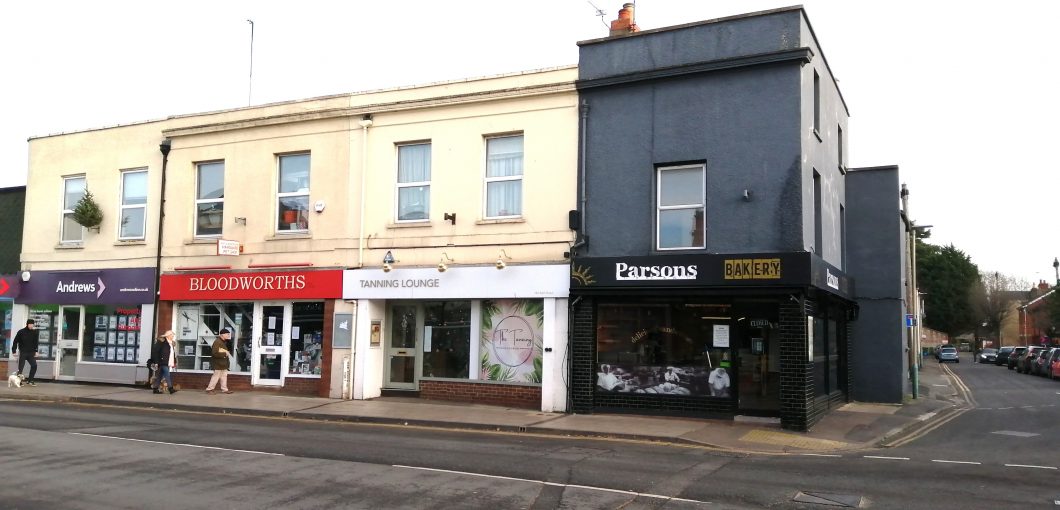
The ironmonger’s shop was always chock-a-block with all sorts of products. Nails, screws and other fixings were stored in large bins behind the counter and weighed out, to be sold by the pound, while some items were also in drawers behind the wooden counter. Putty for installing window panes was stored in large tubs and sold by weight, wrapped in newspaper for the customers.
Wallpaper became popular and replaced paint in even the smallest homes. It cost from one penny a roll and came with a selvedge of ½ inch either side to protect the pattern. Trimming this selvedge was offered at ½ d a roll. The paper went into a special machine and, with a turn of the handle, was trimmed in seconds. Customers could naturally choose to save the half-penny and do the laborious job themselves. Like many D.I.Y. shops today, wallpaper could be chosen from sample books or from a display stand. The paper would then be ordered and would probably arrive quite quickly. Two or three deliveries a day were made to the shop, the goods coming to Cheltenham by rail and then on to the shop by horse and cart, and later by van.
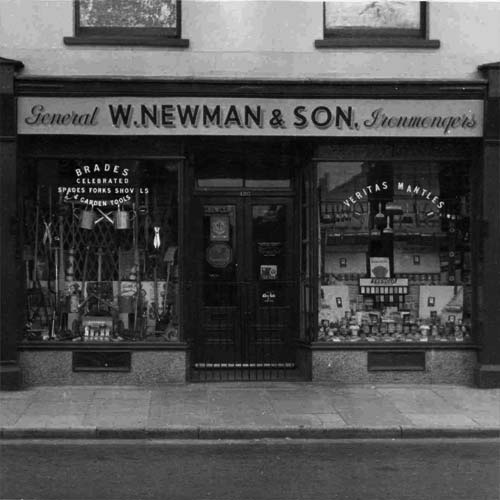
At the side of the shop was a private entrance (number 182) leading to the upstairs accommodation. During the 1930s, after the road was re-numbered, the shop was enlarged by knocking the passageway into the shop and number 182 was lost!
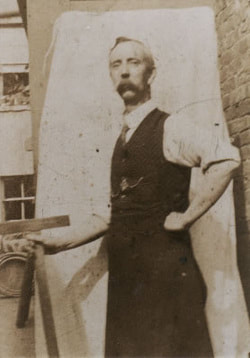
During World War II, when the men were called up for service, the women worked in the shop and among them was Vic’s daughter Doreen. Vic was part of the fire-watch team set up by the traders to protect their businesses. When the sirens sounded the team on duty had to patrol their area to check for incendiary bombs.
The night of 11/12 of December 1940 was not one of Mr Newman’s fire-watch duty nights. However when it became clear that Cheltenham was in for a heavy night of bombing, he decided to check the shop, many of the contents being highly inflammable. He was inspecting the cellar when the oast house (for hop drying) at the rear of the pub next door fell across the doorway to the cellar, trapping him inside. He was fortunate to be able to scramble through a small opening to safety. Sadly, that night twenty-three people in Cheltenham lost their lives and 600 were made homeless.
Vic continued in the business until his death in 1962. Doreen’s husband, known to many as Chubb, then took over. He was assisted by, among others, Mr Jim Butler and Mr Derek Brimfield, who was later to become the landlord of the Brown Jug further along the Bath Road.