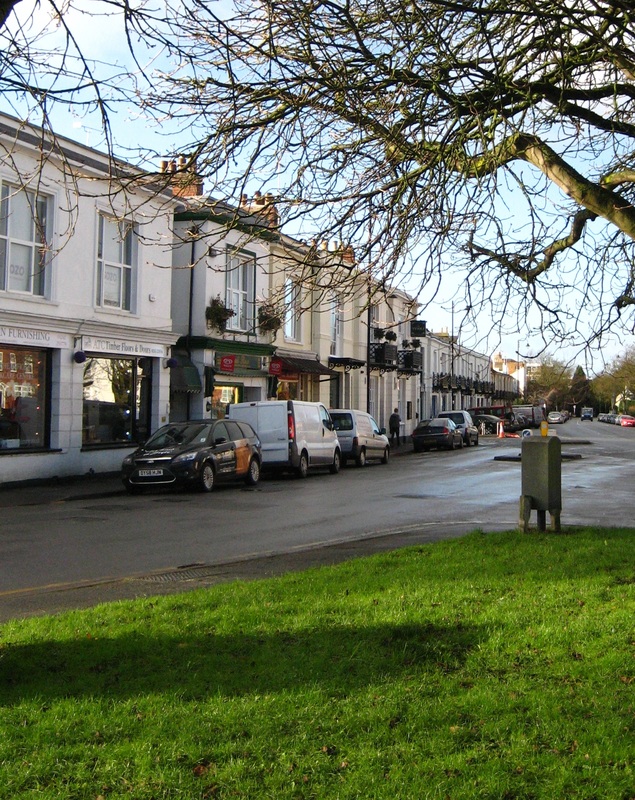
Perhaps the earliest mention in print that we have of Tivoli is to be found in the ‘Cheltenham Looker On’ for 1834, where Tivoli is included in a survey of new buildings in the town. Three buildings were under construction and four had been completed but not yet occupied. These properties were in what is today Tivoli Road – then just referred to as Tivoli.
Tivoli is part of an estate once belonging to the Earl of Essex, later purchased from him by local attorney John Delabere. Around 1800 the Delabere estate was sold in part to the Earl of Suffolk and partly to Henry Thompson, a wealthy Middlesex merchant. The district today known as Tivoli straddles both of these purchases and the street pattern follows very closely the field boundaries in the sale plans.
Davies’ Guide to Cheltenham of 1843 refers to the building boom of the previous ten years when new buildings arose ‘with a rapidity perfectly surprising’ between 1831 and 1841 in Tivoli. The contemporary account in the ‘Cheltenham Looker On’ referred to above, remarks that:
‘Along the line of the rail road fronting Westal an entirely new town appears rapidly springing up and already fifteen neat houses are either wholly or partially built. These are intended for the accommodation of persons in the middle ranks of life, who will here be enabled to pursue their respective callings, and by the establishment of shops, prove a great convenience to this increasing neighbourhood.’
So, Tivoli was born and by 1845 Rowe’s Cheltenham Guide described it as a ‘fashionable suburb.’ Norman’s Guide of 1854 refers to ‘…the aristocratic districts of Lansdown and Tivoli’ and it was to the residents of these areas that the local traders looked for their survival, if not prosperity.
Andover Road is one of the earliest named roads in Tivoli, although up to the turn of the 19th century it was named simply ‘Lippiate’. Andover Road derives its name from the title of the eldest son of the Earls of Suffolk. From 1810, stone-carrying trucks trundled along Lippiate bringing gravel and stone from the quarries on Leckhampton Hill. The trucks were pulled along metal lines and by 1838 around 23,000 tons of stone annually were passing along the middle of the road, in front of the new buildings to which the above mentioned guide books refer. This road was called Tivoli Place by 1840 and became officially Andover Road post-1905.
Tivoli Place indicated the properties that today include the shops and the two early 19th century terraces on the south of the Road, as far as the junction with St Stephen’s Road. These were all built on the part of the 1765 Delabere estate named Westal Furlong.
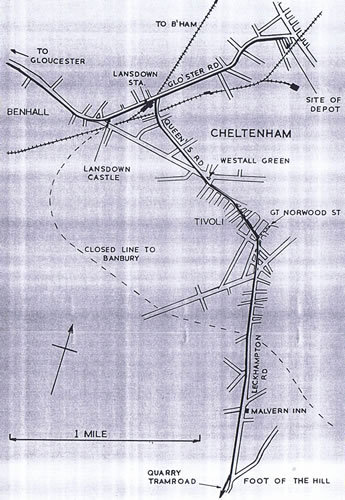
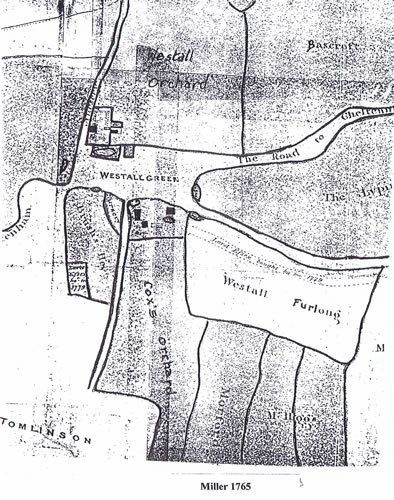
From its very beginnings in the 1830s, Tivoli Place has consisted of a mixture of commercial and domestic properties including premises occupied by builders’ and coal merchants, grocers, a plumber and painter, and the Tivoli Inn. Each block of commercial or domestic properties is interrupted by one of the three roads leading into the heart of Tivoli proper – Tivoli Street, Lypiatt (sic) Street and Hatherley Street. The commercial properties have always started near the entrance to Tivoli Lane to the east and ended at the corner of Lypiatt Street. The two subsequent domestic terraces are separated by Hatherley Street. It was in the middle house of the second Terrace – Hatherley Villas – that Gustav Holst’s grandfather was living in 1845, soon after his arrival in Cheltenham.
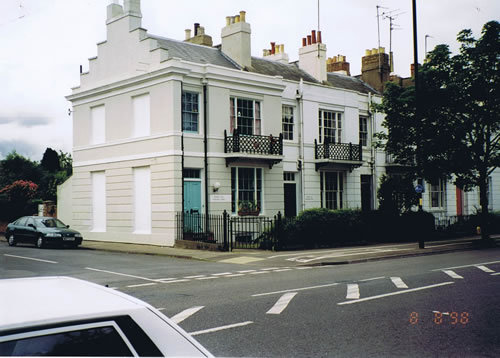
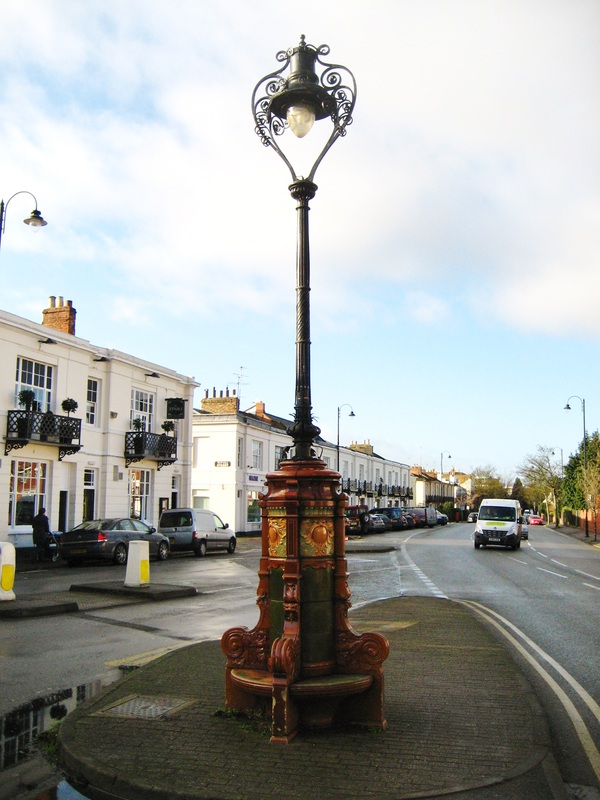
By 1840 the shop and trading sites were numbered 1-19, but number 19 was in fact the first of the private houses of the first terrace today numbered 60a to 70; Hatherley Villas was the second terrace numbered today 72-80, but all these houses and shops were addressed as Tivoli Place. Apparently not all the shops were occupied – nor even built – by this time, and some of the numbering referred to the site rather than the actual building. Also, numbers 1-19 did not always become shops, some being the homes of contractors or suppliers with premises elsewhere. This pattern of change of use lasted well into the 1960s.
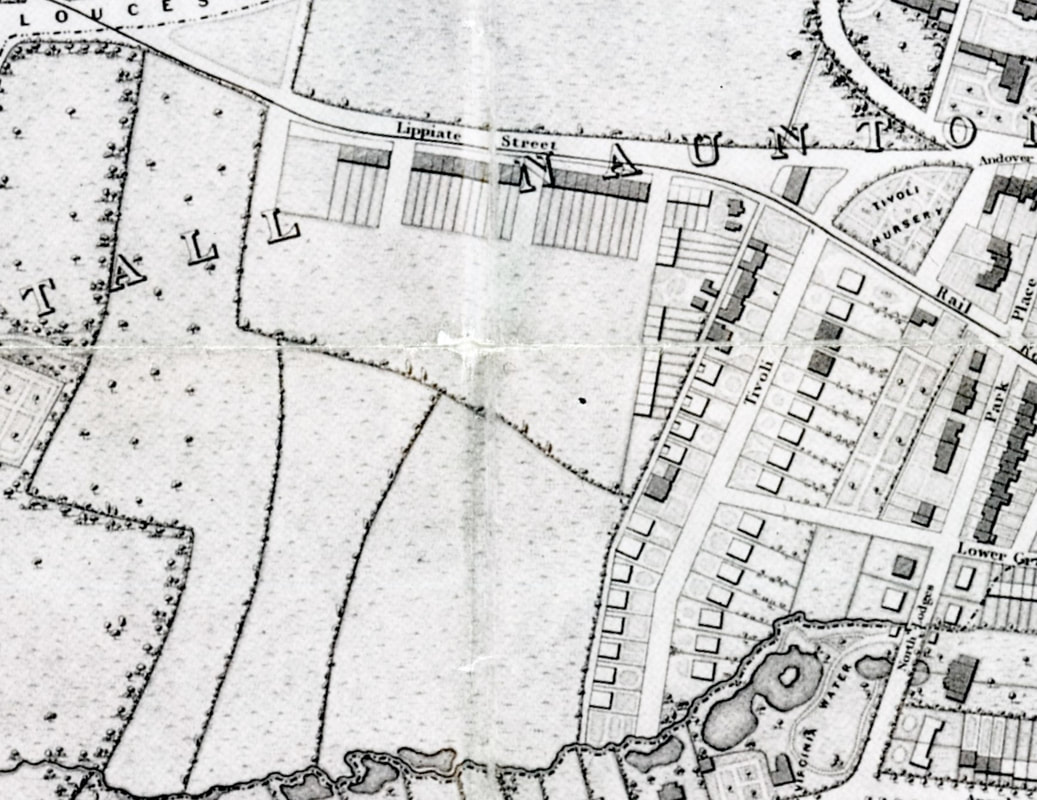
On the corner of Tivoli Lane was a property on a large site, Gueriff Cottage, (the census is difficult to decipher) and next to it followed three attached commercial premises. Today these are the Tivoli Chiropractic Clinic and the Tivoli pub, which occupies the other two of the three original properties. These were numbered 1,2 & 3 Tivoli Place. Across Tivoli Street were two more premises, 4 and 5, one of which was the office of Thomas Dover, builder and coal merchant. Next to this by 1840 was the Tivoli Inn, occupying two sites. By 1849, most of the built premises were occupied but some of the sites were in use as builders’ or coal yards, so there were not exactly 19 buildings as we would understand them today.
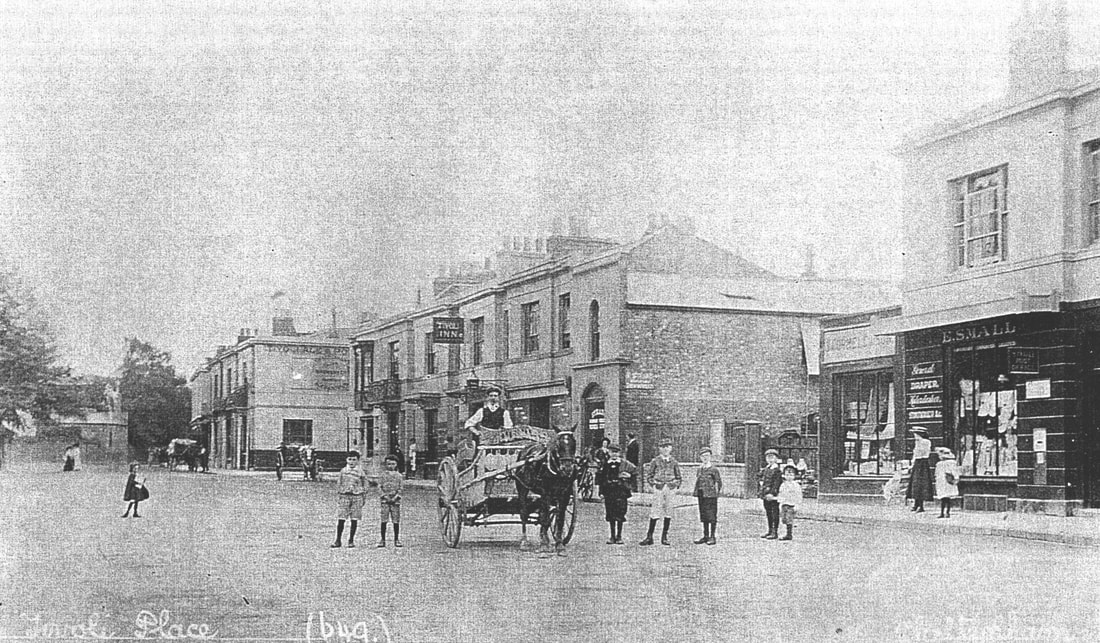
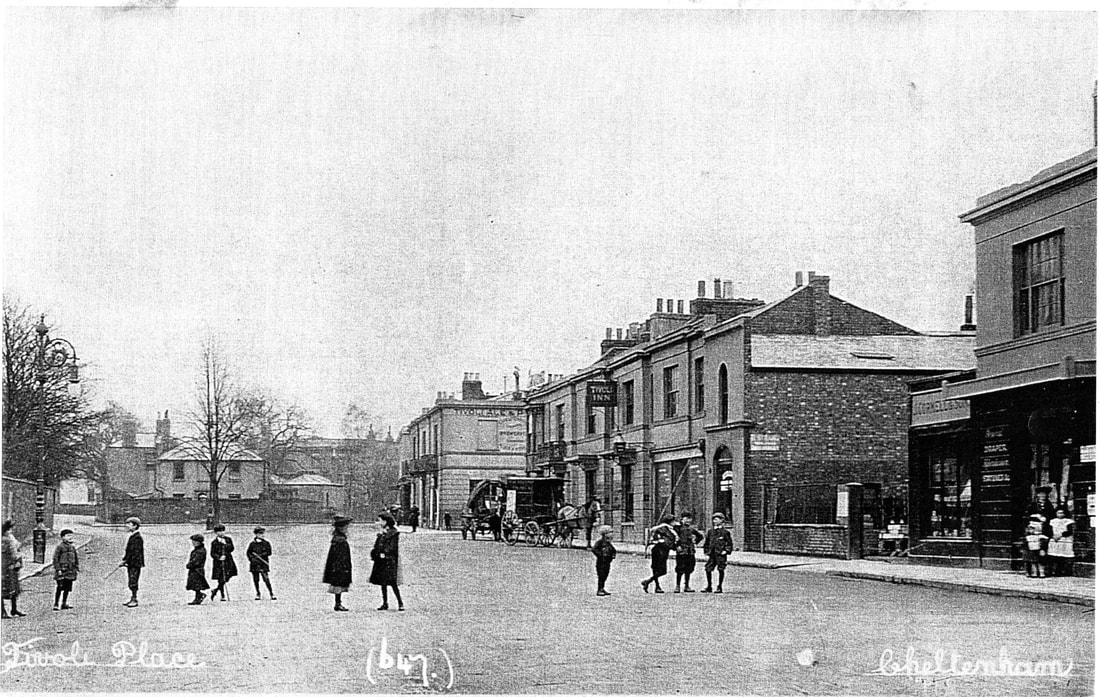
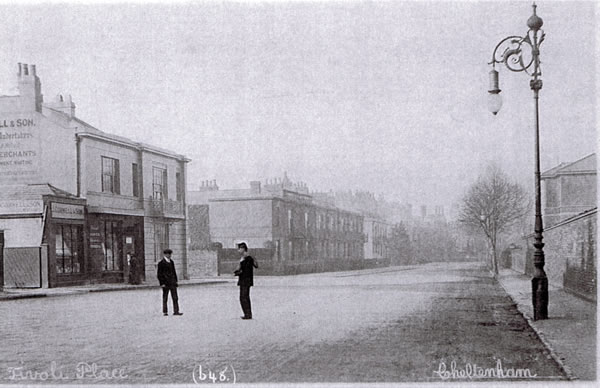
c. 1904
Researcher: Brian Torode