Tivoli │ main map / tivoli map
Tivoli Place – Beyond Tivoli Street
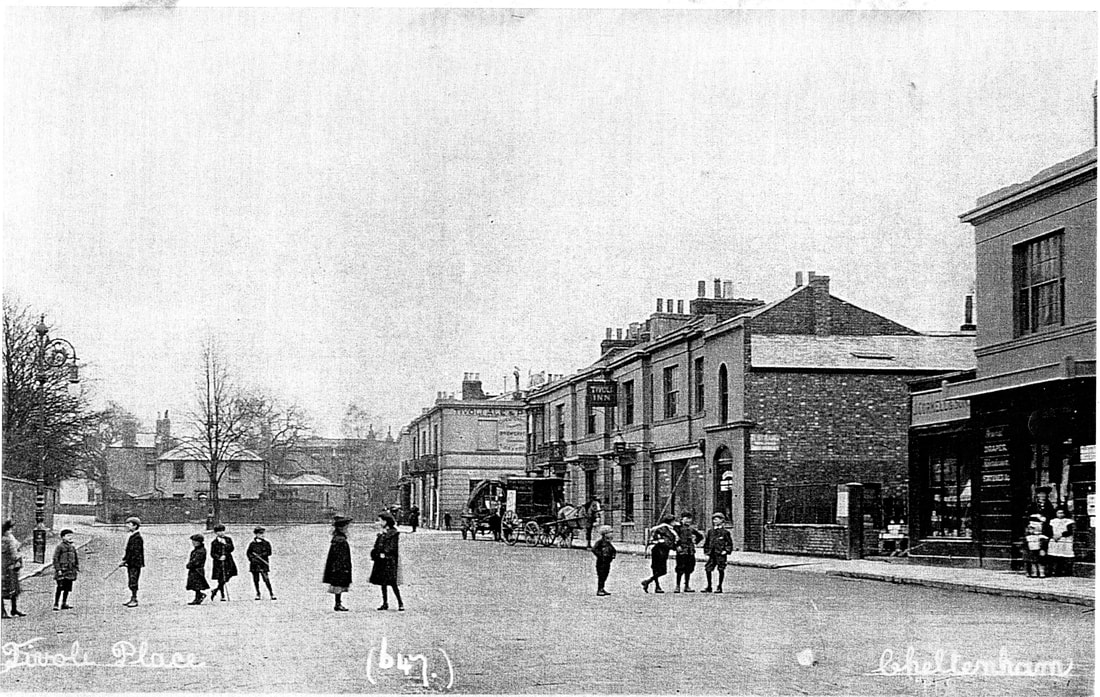
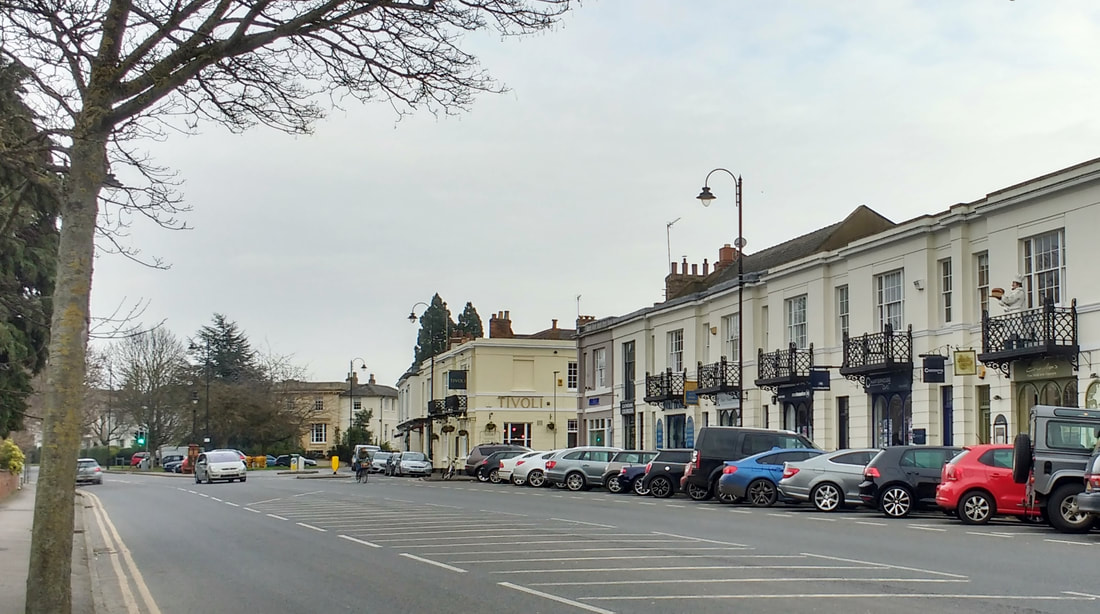
At the corner of Andover Road and Tivoli Street is the start of the long terrace of commercial properties that most people identify with Tivoli Place. However, this terrace has not always been a neat row of attached properties and its present appearance dates from as recently as 1991. At that time the balconies were added and a break in the row where the builder’s yard of S.C. Morris had been sited was infilled to form more shops.
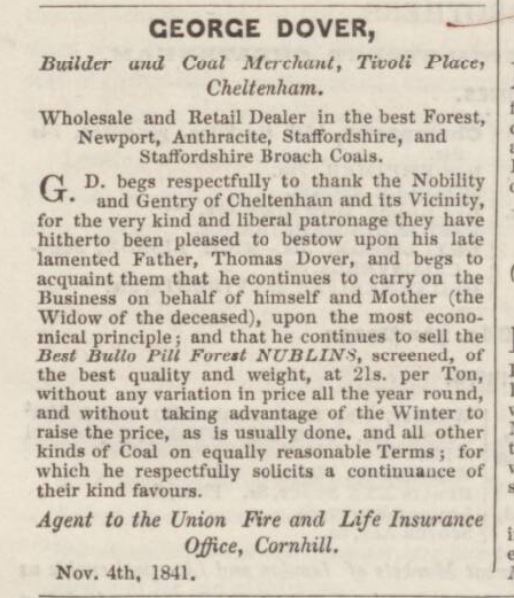
The earliest date of the properties occurs in a Cheltenham street directory of 1837. This suggests that there was a mixture of retail, office and domestic properties, all with first floor accommodation. The address of the whole terrace by 1837 was Tivoli Place and in that year, an advert in the local Directory introduces us to one of the first families, the Dovers:
‘Thomas Dover, Builder of Tivoli Place, Cheltenham: Buildings executed and repaired on the shortest notice, in the various branches of masonry, bricklaying, carpentry and joinery, plumbing, painting, glazing etc.’
A second advert appeared in the same edition of the Directory:
‘Thomas Dover, Coals. Families supplied with the best Staffordshire Broach, Welsh, Newport and Forest, on reasonable terms.’
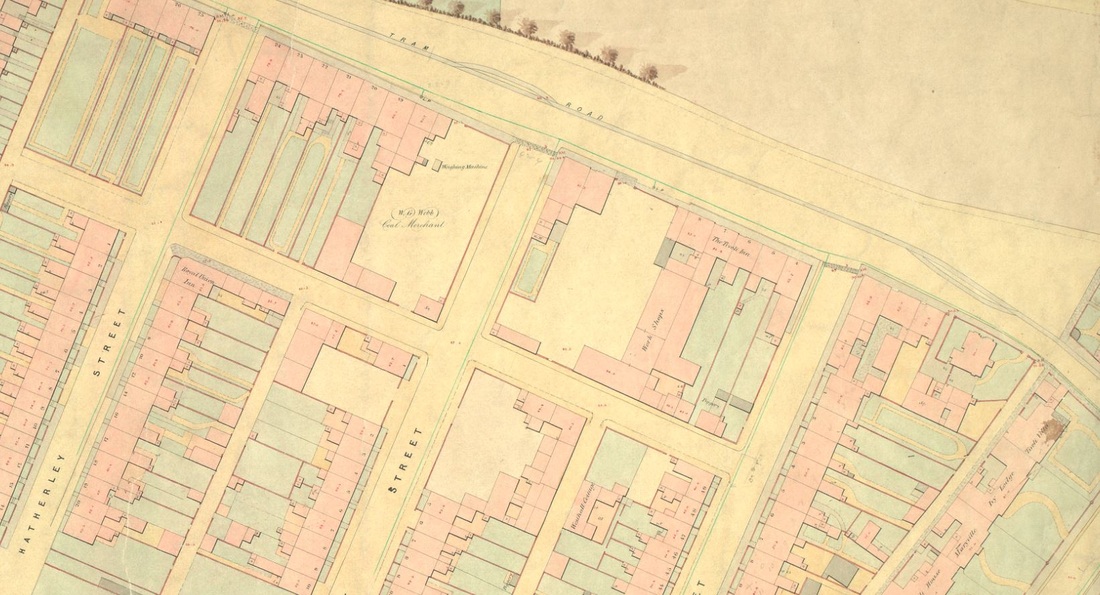
The exact location of Dover’s business premises is not clear but a directory of 1840 lists Dover’s office immediately before the Tivoli Inn, which was on the site now partly taken by Catherine Colebrook and Tivoli Trading. The actual coal yard was further along the road, on the corner site of Lypiatt Street, now occupied by Lypiatt Row and stretching back as far as Groves Batteries. This however does present a problem unless of course, the coal yard was shared by more than one company, for in 1845 the local directory carried the following advert:
‘Barrett, M; Coal Merchant, 19 Tivoli Place.
Mark Barrett, Coal merchant, very superior coal from the Parkend Collieries, Lydney, Forest of Dean. Orders received at Mr Blake’s.’
Thomas Dover’s business may well have started some time before the first buildings were constructed in Tivoli Place and there is some evidence to show that he was responsible for the building of one of the house terraces in the late 1820s.
Thomas died in 1841, having been born out of the county in 1786. He was succeeded by his son George, who advertised that he had taken over his father’s business. By the time of the 1851 census he lived with his family at 19 Tivoli Place, now number 60a, where he was described as a builder and coal agent employing 45 men. By 1851 George’s widowed mother was living next door at number 20. She hailed from Holesworth in Suffolk, where she was born in 1780. Living with her was her daughter Esther Cook, with her husband and her four children.